01
Soil conditions
Before work, assess soil moisture and type as well as crop residue.

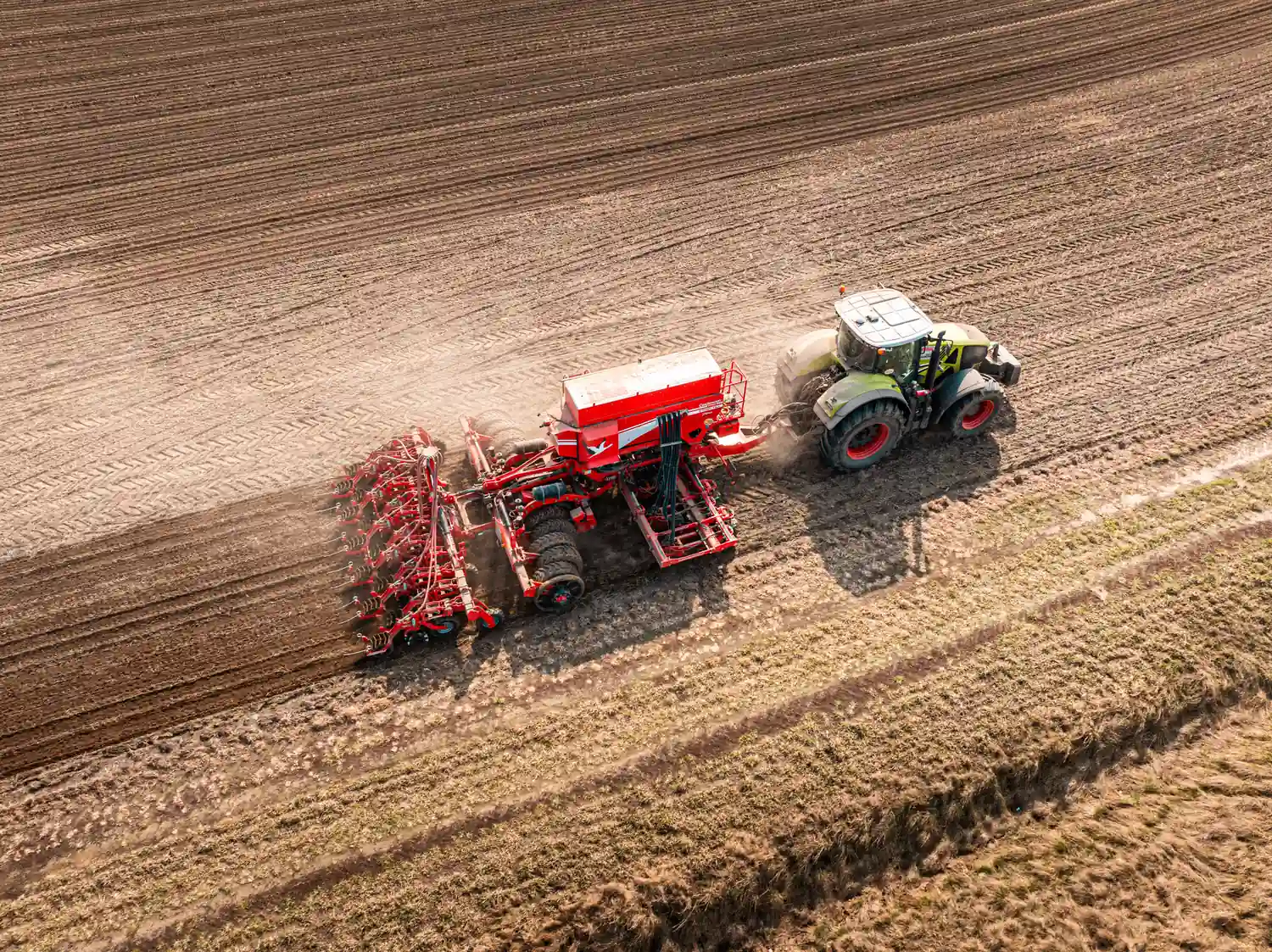
Initial strip preparation with an ST or STK and PST may take place in autumn or spring. In autumn, PST can also sow cover crops in the inter-rows. Strips prepared in autumn with ST + PST can be refreshed shallowly in spring with ST + PST or PST alone. Main-crop precision sowing follows later with a planter in a separate pass.
Initial preparation
In autumn or spring: ST or STK with PST
Strips after winter
Already deeply loosened during autumn preparation
Spring refreshing
ST with PST or solo PST shallowly refreshes the upper layer
Planter alone
A separate precision planter performs sowing later
Initial preparation may take place in autumn or spring: the ST or STK loosens the strip deeply, places fertiliser and reconsolidates the soil with its roller, while the attached PST finishes the upper layer. In autumn, PST can also sow cover crops in the inter-rows. Strips prepared in autumn with ST + PST are refreshed in spring with ST + PST or with PST alone, working shallowly in strips already loosened deeply in autumn. Main-crop precision sowing follows later with a planter in a separate pass.
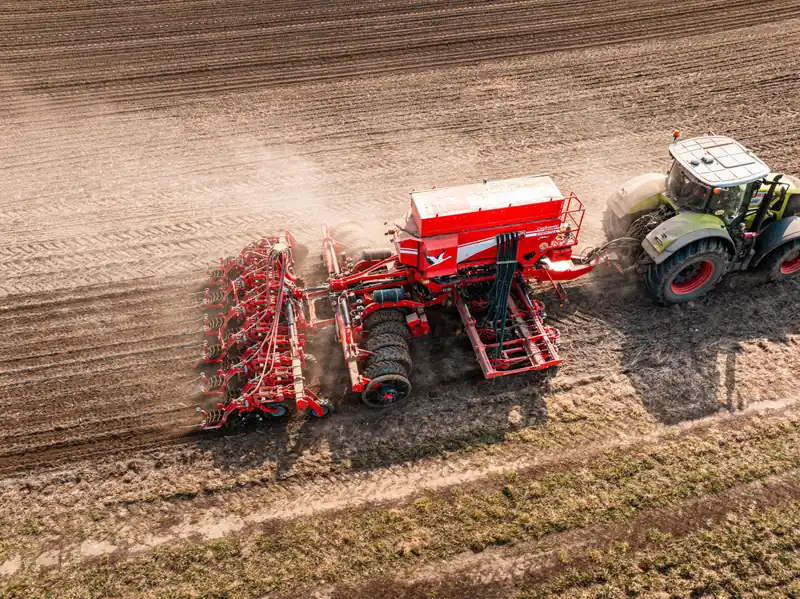
Checks cover initial strip preparation and spring refreshing. PST can work attached or alone.
Before work, assess soil moisture and type as well as crop residue.
On the first pass, PST finishes the upper layer behind the roller of an ST or STK unit; the strip may be prepared in autumn or spring.
Strips prepared in autumn with ST + PST can be refreshed with ST + PST or PST alone. PST alone works shallowly without repeating deep loosening or fertilising.
After refreshing, main-crop precision sowing is performed by the planter in a separate pass.
Initial preparation with ST or STK and PST may take place in autumn or spring. Strips prepared in autumn with ST + PST are refreshed in spring with ST + PST or PST alone. Main-crop precision sowing follows later in a separate pass.
Define the soil type, following crop and amount of residue before work begins.
During the first pass, in autumn or spring, the unit cultivates the strip and loosens the soil deeply where the crop row is planned.
Fertiliser is placed in the strip during the same first pass.
The roller reconsolidates the strip, then PST attached to the ST or STK finishes its upper soil layer behind the roller.
Strips prepared in autumn with ST + PST can be refreshed in spring with the same combination. The precision planter works later in a separate pass.
Alternatively, PST alone refreshes the upper layer shallowly in strips already loosened deeply in autumn. It does not repeat deep loosening or fertilising; the main-crop precision planter works later in a separate pass.
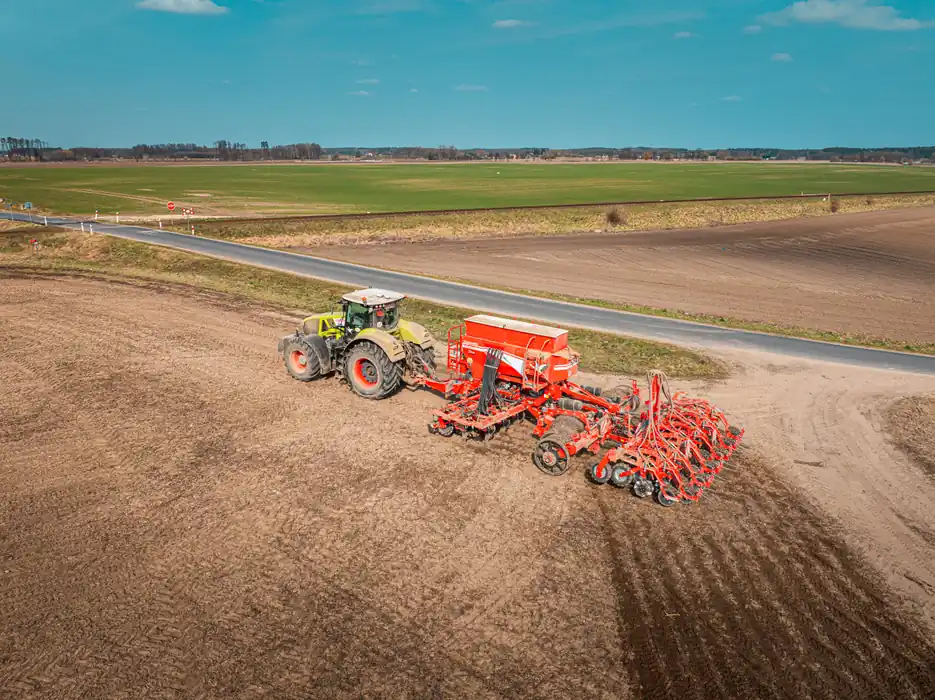
During initial preparation, PST works behind the roller as part of an ST or STK unit. In spring, it can also work alone to refresh shallowly the upper layer of strips prepared in autumn with ST + PST.
Initial strip preparation may take place in autumn or spring. Two spring equipment options are available for strips prepared in autumn with ST + PST.
The ST or STK cultivates the strip, loosens deeply, places fertiliser and reconsolidates it with the roller. Attached to the unit, PST finishes the upper layer behind the roller.
In spring, ST + PST refreshes the strips prepared in autumn. Main-crop precision sowing follows later in a separate pass.
In spring, PST alone refreshes the upper layer shallowly in strips already loosened deeply in autumn, without repeating deep loosening or fertilising. Main-crop precision sowing follows later in a separate pass.
PST can sow cover crops between rows in autumn. Initial preparation with ST or STK and PST may take place in autumn or spring, and autumn-prepared strips are refreshed in spring with ST and PST or PST alone. A separate precision planter sows the main crop later.
In the two-stage method, PST finishes the strip during initial preparation and may also shallowly refresh an autumn-prepared strip in spring. A precision planter sows later in a separate pass.
Strip cultivation, fertilisation and sowing take place in one pass.
The first pass comprises strip cultivation, deep loosening, fertiliser placement, roller reconsolidation and upper-layer finishing by PST.
Sowing follows immediately after strip preparation.
A separate precision planter sows the main crop later; PST can sow cover crops between rows in autumn.
Seed is placed in a freshly loosened strip.
Before sowing, strip settlement, moisture and surface condition must be assessed.
Residue must pass through the cultivation and sowing set during one pass.
Residue amount and distribution should be assessed before both passes.
The cultivator and sowing section operate as one set.
Initial preparation: ST or STK with PST. Spring refreshing of strips prepared in autumn with ST and PST: ST with PST or solo PST. The precision planter is separate.
Strip cultivation and sowing require the same suitable weather window.
Initial preparation may be in autumn or spring; after autumn preparation, upper-layer refreshing precedes separate spring sowing.
* Method selection depends on the crop, soil type, residue load, moisture and work organisation. The configuration should be based on field conditions and the machinery available on the farm.
Initial preparation with ST or STK and PST may take place in autumn or spring. Strips prepared in autumn with ST and PST are refreshed in spring with ST and PST or PST alone. A separate precision planter sows later.
Contact us to discuss the two-stage workflow and the information required when selecting a configuration.
Selection should follow an assessment of the crop, soil, residue, moisture and pass organisation.
After autumn preparation with ST and PST, refresh in spring with ST and PST or PST alone; a separate precision planter sows later.
Ask for available technical data and discuss the configuration for the planned application.
Support programme terms may change. Confirm investment eligibility and current requirements with the relevant adviser or institution.
Key elements of preparation, refreshing and separate sowing.
During initial preparation, ST or STK deeply loosens the strip, places fertiliser and reconsolidates with a roller; PST finishes the upper layer behind it.
Initial preparation
autumn or spring
Strips prepared in autumn with ST and PST can be shallowly refreshed in spring with ST and PST or PST alone, without repeating deep loosening or fertilisation.
Spring refreshing
two equipment options
PST can sow cover crops between rows in autumn. After refreshing, a separate precision planter sows the main crop.
Planter alone
main-crop precision sowing
Maciej Czajkowski uses two-stage strip-till on his Sokołowo farm. Initial preparation uses ST or STK with PST; autumn-prepared strips can be refreshed in spring with ST and PST or PST alone, then sown with a separate precision planter.
Maciej Czajkowski
Maciej Czajkowski
ST or STK cultivates and deeply loosens the strip and places fertiliser; PST finishes the upper layer behind the roller.
After winter, the strips are already deeply loosened; assess their surface before sowing.
Shallowly refresh with ST and PST or with PST alone, without repeating deep loosening or fertilisation.
After refreshing, a separate precision planter performs main-crop sowing.
PST prepares and refreshes strips and can sow cover crops between rows in autumn.
Complete the form to discuss initial ST/STK preparation with PST, spring refreshing and separate precision sowing.

OR CALL DIRECTLY
Michał Łuciów
Technical sales advisor
Contact after enquiry review